The 8 Phases of EMDR Therapy
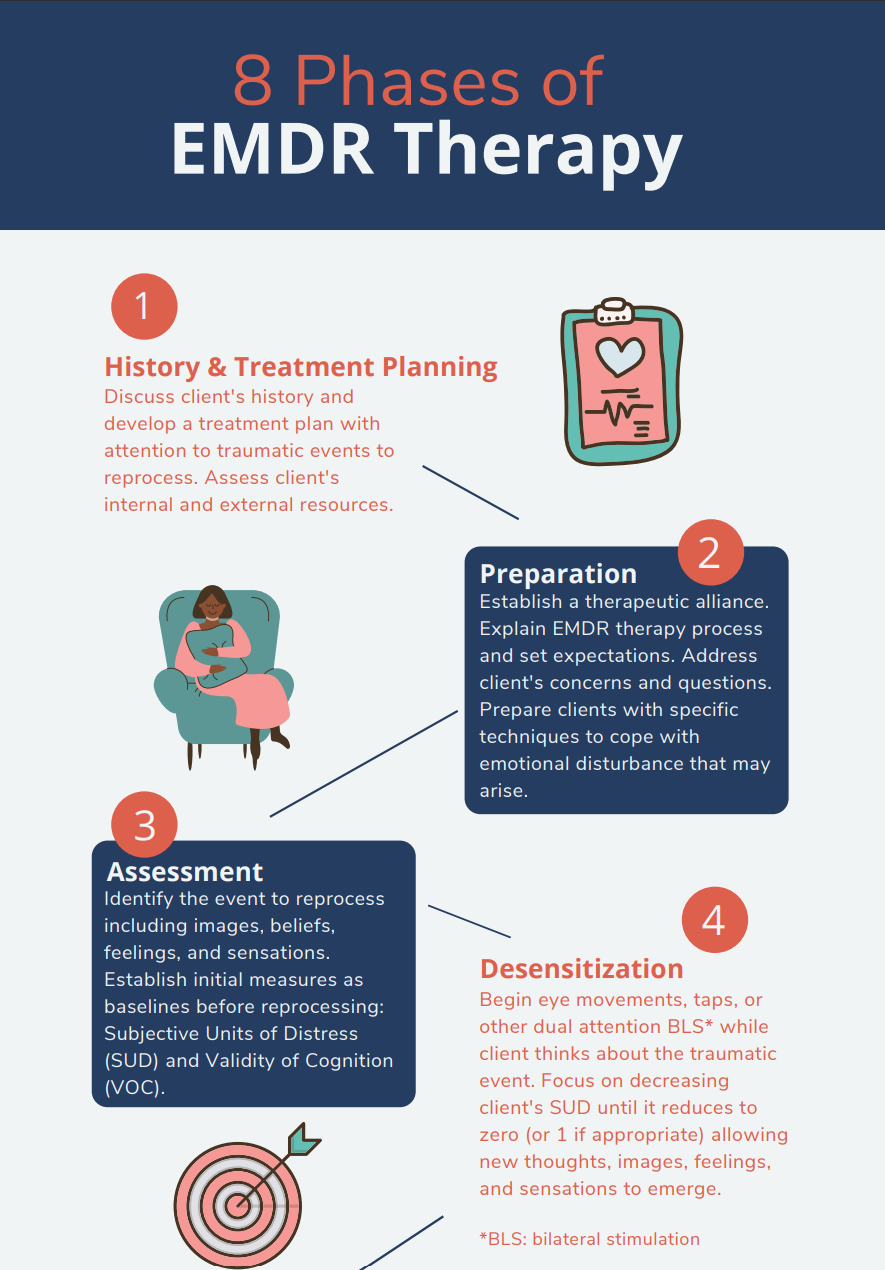
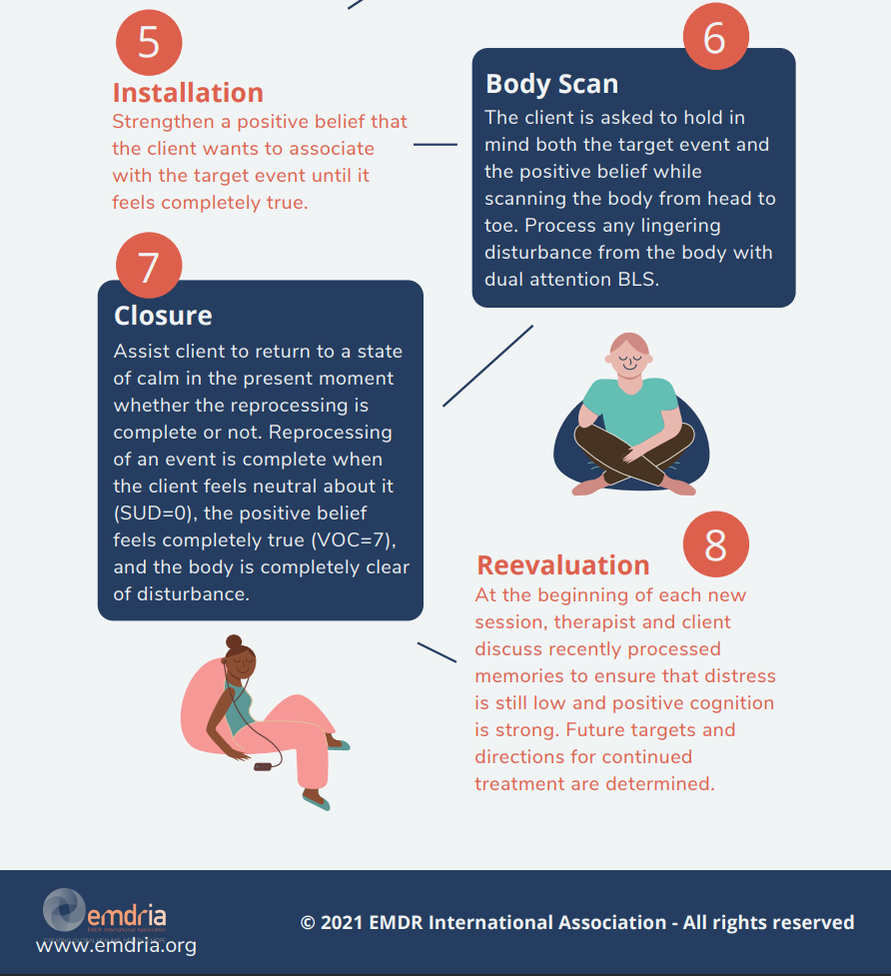
Gabriel Vega Counseling, PLLC utilizes EMDR Therapy’s 3-Pronged Approach to distinguish which trauma related material will be targeted via the 8 phases of EMDR therapy. Past events are targeted first for clients without complex developmental trauma. Following the processing of those past targets, the EMDR clinician then moves to targeting present triggers. Finally, the focus becomes on exploring the future and identifying what future template(s) are necessary for the client to experience successful potential outcomes.
For those with complex developmental trauma, past events may be too overwhelming to target first, so present/recent triggers are addressed instead.
During initial sessions we will focus on building rapport and trust, establish diagnostic clarification, and work to expand the clients window of tolerance. At the client's pace, we will engage in history taking, case conceptualization, and treatment planning.
Note: The timing of addressing all three prongs via the 8 phases may vary based on client stability, readiness, and individual situations.
Note: Some clients without significant dissociative features have been able to find relief in about six to 12 reprocessing sessions (Phase 4: Desensitization aka: Processing), while others may take many years before engaging in any Phase 4 work.
Note: Some clients may only work within the first two phases of EMDR with no need to reach Phase 4 for relief from some symptoms.
Deep Brain Reorienting (DBR) Therapy

Deep Brain Reorienting (DBR) is a new way of reprocessing traumatic material, which Dr. Frank Corrigan, MD, FRC Psych, developed. Dr. Corrigan discovered that there is shock experienced at the start of a disturbing event that gets stored in our eyes and other parts of the body (in rare cases around the muscles around the mouth for nonverbal and neonatal trauma, and other times in rare cases it's felt in the muscles around the ear). This shock of the traumatic event is not the first thing to register in your brain, but instead, what's registered first is this Orienting Tension (OT), usually the tension you feel the first moment you realize something is wrong that is felt the forehead, around the eyes, or the back of the neck and shoulders (you feel the shock in the eyes).
Once the core of the distressing material is brought up in session, the client is asked to focus on the OT while reprocessing to keep them from becoming overwhelmed or dissociating while reprocessing and clearing the core distress and shock of their trauma event. Dr. Corrigan discovered that by tapping into uncleared shock and tension that occurs in the body milliseconds before any emotion, action, or cognitive response takes place in a traumatic event, those usually overwhelmed by EMDR Phase 4 work were able to reprocess material with more success.
DBR focuses on the brain stem's response to the traumatic material, which differs significantly from many modalities. Many clients considered overly complex or stuck found relief with DBR. Many clients who have done extensive work with EMDR, and feel they have something that has yet to clear, may benefit from DBR. DBR is not for everyone, as some cases did better with EMDR Phase 4 reprocessing versus DBR.
Once the core of the distressing material is brought up in session, the client is asked to focus on the OT while reprocessing to keep them from becoming overwhelmed or dissociating while reprocessing and clearing the core distress and shock of their trauma event. Dr. Corrigan discovered that by tapping into uncleared shock and tension that occurs in the body milliseconds before any emotion, action, or cognitive response takes place in a traumatic event, those usually overwhelmed by EMDR Phase 4 work were able to reprocess material with more success.
DBR focuses on the brain stem's response to the traumatic material, which differs significantly from many modalities. Many clients considered overly complex or stuck found relief with DBR. Many clients who have done extensive work with EMDR, and feel they have something that has yet to clear, may benefit from DBR. DBR is not for everyone, as some cases did better with EMDR Phase 4 reprocessing versus DBR.
